








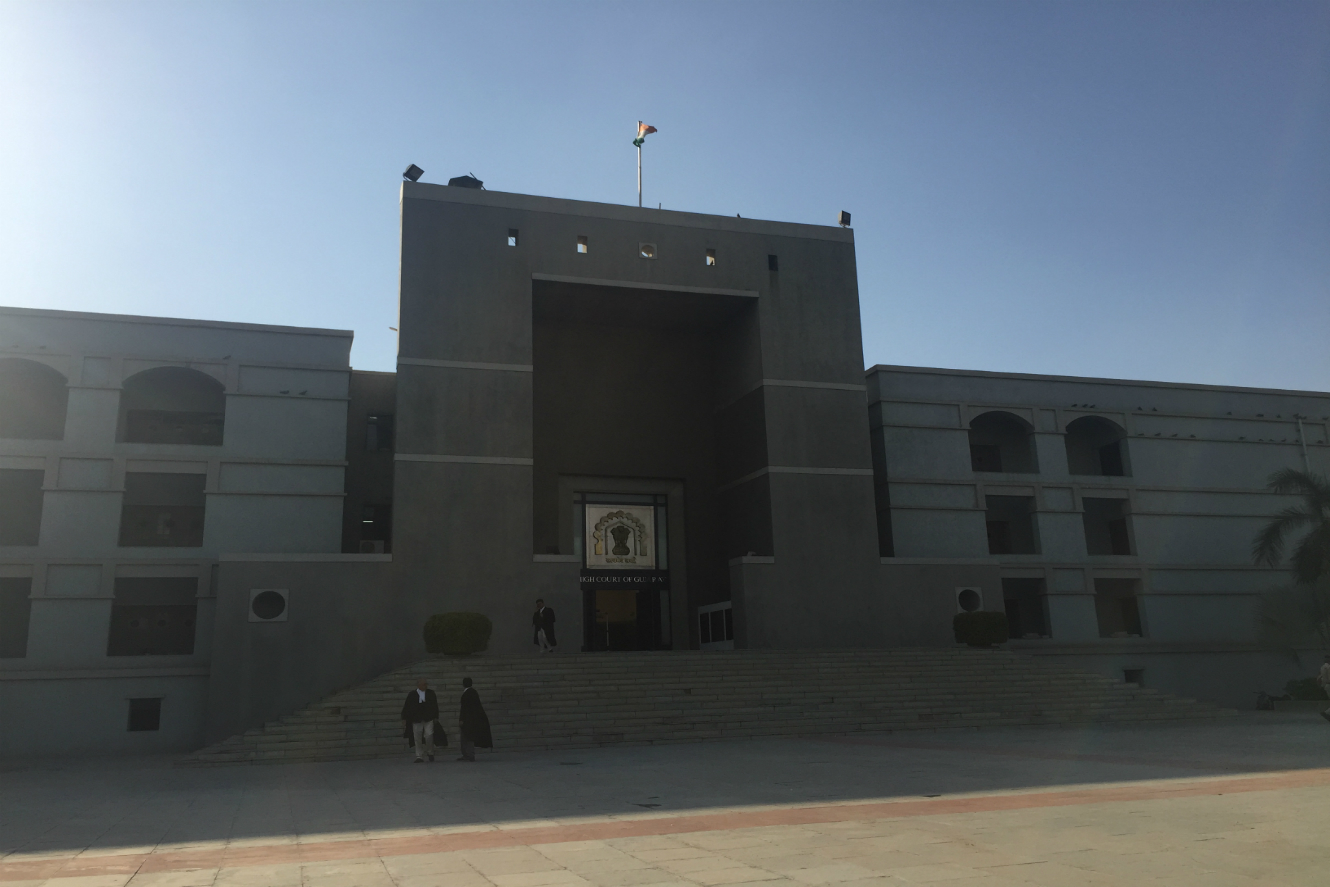
Gujarat High Court: While deciding the present case wherein the focal point was marital rape and unnatural carnal activity, the Bench of J.B. Pardiwala, J., observed that a wife is not a chattel and a husband having sexual intercourse with his wife is not merely using a property, he is fulfilling a marital duty with a fellow human being with dignity equal to that he accords himself. He cannot be permitted to violate this dignity by coercing his wife to engage in a sexual act without her full and free consent. Furthermore, the Court urged that the time is ripe that the legislature intervenes and goes into the soul of the issue of marital rape as it is a serious matter which unfortunately is not attracting serious discussions at the end of the Government.
In the present matter, the applicant was accused by his wife of inflicting torture and performing sexual activity (often unnatural) without her consent on many occasions. It was argued by the applicant’s counsel Jigar Gadhvi that, in India, marital rape is not recognized and the same is not an offence. However it was submitted that at the most a prima facie case of cruelty under S. 498A of IPC can be made out against the applicant. Appearing for the respondents, Rajesh K. Shah contended that the present case is one of marital rape as there was unwanted intercourse by the applicant with his wife and the consent was obtained by force. Thus the case at hand is one of non-consensual act of violent perversion by a husband against the wife where she was abused physically and sexually.
The Court delved into the provisions concerned of the Penal Code i.e. Sections 377 and 376. The issues raised by the Court were that whether a husband can be prosecuted for the offence of rape under Section 376 of IPC at the instance of his wife; whether a wife can initiate proceedings against her husband for unnatural sex under Section 377 of the IPC; and is there a concept of marital rape. After a detailed analysis of the provisions and the facts of the case, the Court observed that Section 377 identifies certain acts which if committed would constitute an offence and such a prohibition regulates the sexual conduct regardless of gender identity and orientation. Consent is not the determining criterion in the case of unnatural offences and rather any offence which is against the order of nature and can be described as carnal penetration would constitute an offence under Section 377, thereby making it clear, that a wife can initiate proceedings against the husband under Section 377 for unnatural sex. The Court however noted that as per the current legal position the wife cannot initiate proceedings against her lawfully wedded husband for the offence of rape punishable under Section 376 as the idea is that, by marriage a woman gives irrevocable consent to her husband to have sex with her any time he demands it. The Bench however strongly stressed that marital rape is not merely a concept and stated that, “It is time to jettison the notion of ‘implied consent’ in marriage. The law must uphold the bodily autonomy of all women, irrespective of their marital status.” [Nimeshbhai Bharatbhai Desai v. State of Gujarat,2018 SCC OnLine Guj 732, decided on 02-04-2018]









0 replies