








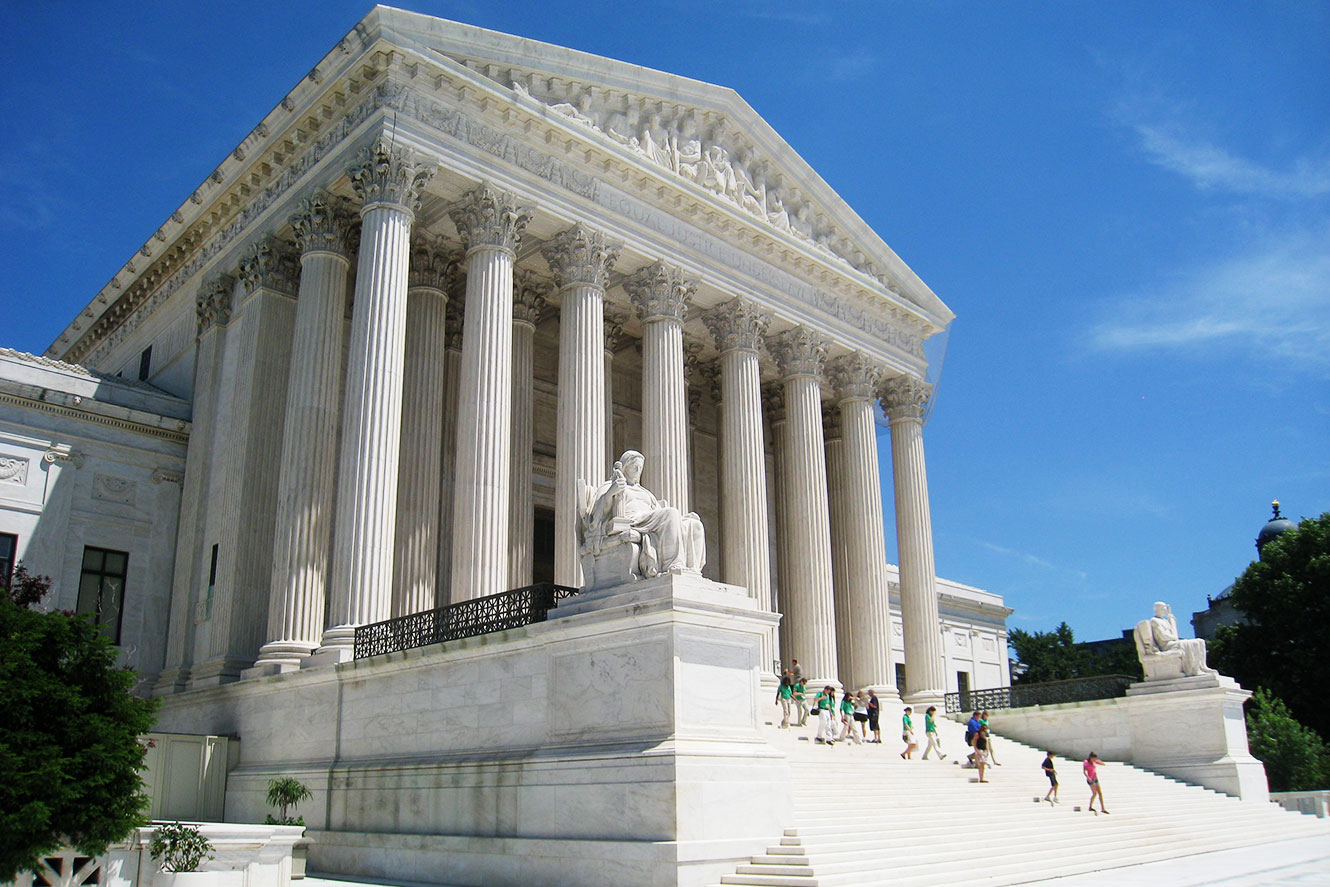
Supreme Court of The United States (SCOTUS): In a crucial decision before the upcoming Presidential Elections in the USA, the SCOTUS temporarily reinstated South Carolina’s (SC) requirement that absentee ballots include witness signatures. The Court however stated that any ballots cast or received within two days of this order may not be rejected for failing to comply with the witness signature requirement.
South Carolina has had a witness requirement for absentee voters since 1953. Under the current law, voters returning mail-in ballots swear an oath printed on the return envelope that confirms they are eligible to vote and that the ballot inside is theirs. The oath has to be witnessed by one other person who has to sign below the voter’s signature and write their address. On September 18th, U.S. District Judge Michelle Childs ruled that because of the dangers of the highly contagious and deadly COVID-19, South Carolinians voting absentee did not have to get a witness signature and address on their mail-in ballot envelope. Her order was appealed to the U.S. 4th Circuit Court of Appeals by the S.C. Election Commission. A three-judge panel of the U.S. Court of Appeals for the 4th Circuit reinstated the requirement before the Full Appeals Court reversed course and put it on hold again.
Brett Kavanaugh, J., in his concurring opinion laid out his reasons for staying the decision of the District Court. As per the observations of Kavanaugh, J., firstly the US Constitution “principally entrusts the safety and the health of the people to the politically accountable officials of the States and secondly, the Supreme Court has repeatedly emphasized that federal courts ordinarily should not alter state election rules in the period close to an election and by ordering an alteration in South Carolina’s witness requirement shortly before the election, the District Court has defied that principle and this Court’s precedents. [Marci Andino v. Kylon Middleton, Application for stay No. 20A55, decided on 05-10-2020]
[With Inputs from Washington Post]
Sucheta Sarkar, Editorial Assistant has put this story together





0 replies